Mini Split Replacement Cost
Replacing a mini split usually costs about the same as a new install of the same size, minus whatever the contractor can safely reuse: the circuit, the wall opening and sometimes the line set. Manufacturer guides from 2026 put a new single-zone system at roughly $2,000 to $6,000 installed, which is a fair ceiling for a like-for-like swap.
Sending your request
Please keep this page open. The form is locked so the request is not sent twice.
Your request was received
We passed it to an installer in your area. If one accepts, they contact you using the phone number or email you gave. We cannot say how soon, and you are not required to hire anyone.
No reply after a few days? Check your spam folder, then use the contact page.
Short answer
No current source we trust publishes a separate national figure for mini split replacement. Use new-install ranges as the baseline: about $2,000 to $6,000 per single-zone system in Bryant's 2026 guide. Reusing the line set and circuit can lower the price. Removal, refrigerant recovery and a refrigerant change can raise it.
What raises or lowers a replacement price
| Item | Effect on cost | Why |
|---|---|---|
| Reused line set | Lowers | Only if the size suits the new unit, the lines are clean and the refrigerant is compatible. |
| Reused circuit and disconnect | Lowers | Works when the new unit's nameplate rating matches the existing breaker and wire. |
| Same head location | Lowers | The wall opening and drain route stay the same, though a new mounting plate is typical. |
| Old unit removal | Raises | Refrigerant must be recovered by a certified technician before disposal. |
| Refrigerant change | Raises | Newer A2L refrigerant equipment may need new lines or added safety steps. |
| Higher efficiency or cold-climate model | Raises | Equipment price climbs with SEER2, HSPF2 and low-temperature heating output. |
| Multi-zone outdoor unit failure | Raises | The new outdoor unit must work with each indoor unit, which may mean replacing them too. |
Refrigerant changes and line set reuse
Many older mini splits use R-410A. EPA's technology transitions rules are moving new residential systems to lower global warming potential refrigerants, many of them classed as A2L, mildly flammable. A new unit on a different refrigerant may not be approved for the old copper, and the manufacturer's manual decides. Ask the contractor to state in writing whether the line set stays or goes and why.
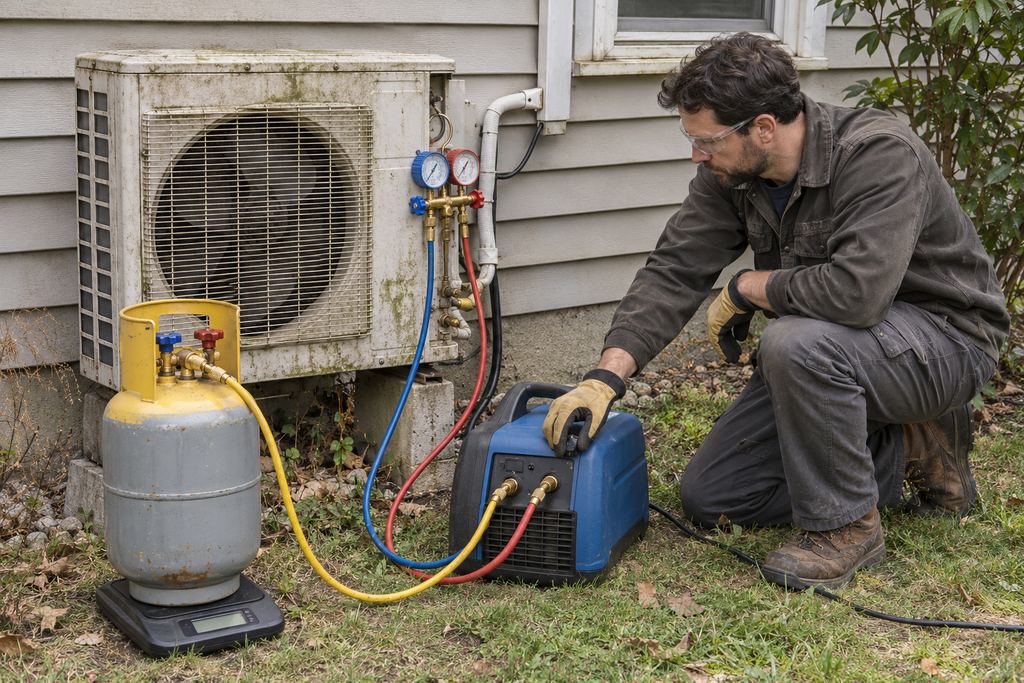
Removing the old system means recovering its refrigerant, which under EPA Section 608 rules takes a technician holding that certification. Expect a removal line item on the quote.
Replacement options
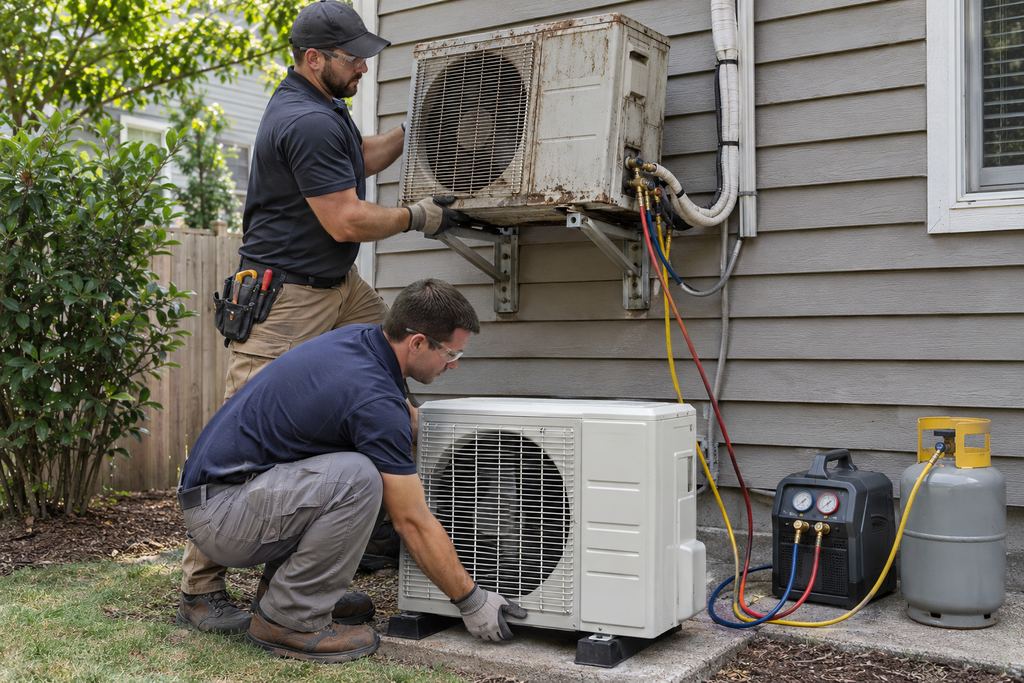
- Like-for-like single zoneSame capacity, same location. The simplest and usually cheapest swap.
- Upsized or downsizedIf the old unit never kept up or short-cycled, ask for a load calculation before choosing the new size.
- Multi-zone rebuildReplacing the outdoor unit may require matching indoor units. See multi-zone installation.
Efficiency and incentives on a replacement
Ten or more years of progress in inverter compressors means a new unit with higher SEER2 and HSPF2 ratings can cut running costs. ENERGY STAR lists December 31, 2025 as the end of the federal efficiency credits, so a 2026 swap does not qualify for the heat pump credit. For 2026 replacements, check the ENERGY STAR rebate finder and your utility.
For the full scope of a swap, see mini split replacement service. New installs in rooms that never had a unit are priced on the mini split installation cost page.
Cost questions
What is the lifespan of a mini split?
We have not found a manufacturer-published lifespan we can cite. Life varies with installation quality, climate, hours of use and maintenance. A unit with a well-made line set, a clear drain and clean filters will usually outlast a neglected one.
Are mini splits worth repairing?
Often yes when the unit is fairly young and the fault is a single part such as a sensor, fan motor or control board. Repeated refrigerant leaks, a failed compressor or an obsolete refrigerant usually tip the decision toward replacement. Ask for both prices in writing.
What are the disadvantages of a mini split?
The per-room cost adds up in larger homes, the indoor heads are visible, filters need frequent washing, and blocked drains can leak indoors.
Why is my electric bill so high with mini splits?
Common reasons include dirty filters or coils, a unit that is undersized for the room, a refrigerant leak, setpoints that change often, or backup electric heat running. Clean the filters as the manual describes, then have a technician check the system if bills stay high.
Price your replacement
Send your ZIP code, the age of the old unit and the rooms it serves. Installers can tell you what stays and what has to be replaced.