Sources we rely on
Technical statements are checked against primary sources where one exists. For equipment efficiency and labels that means ENERGY STAR and the U.S. Department of Energy appliance standards program. Refrigerant rules come from the U.S. EPA, including Section 608 and the technology transitions rules on newer A2L refrigerants. Capacity and sizing guidance follows ACCA Manual J. Electrical statements point to the National Electrical Code published by NFPA and to the fact that local code and permits decide the details. Manufacturer manuals are used for model-specific points.
We study search results and competitor pages to learn which questions people ask and what a useful page should cover. That research shapes structure only. A claim repeated on many websites still needs a real source before it appears here.
Claims the guides do not make
- No sizing from square footage aloneRules of thumb are labeled as rough. The guides send readers to a load calculation, as in our what size do I need article.
- No price of our ownA cost figure appears only as a published estimate with its source and year, next to the factors that change it. See the cost guides for how this looks in practice.
- No tax credit or rebate promisesThe federal 25C credit does not apply to equipment placed in service after December 31, 2025, according to ENERGY STAR. We point readers to the ENERGY STAR rebate finder and their utility instead of promising money back.
- No warranty terms we cannot sourceManufacturer warranty length and registration rules change, so we tell readers to check the maker's current terms.
- No invented proofNo made-up reviews, ratings, customer stories, staff, years in business, response times, license numbers or coverage areas.
Safety limits
Homeowner advice stays inside what an owner's manual allows: cleaning washable filters, keeping the outdoor unit clear of snow, leaves and debris, resetting a tripped breaker once, and reading error codes from the manual. The guides do not walk readers through opening electrical compartments, wiring a circuit, brazing, or connecting and charging refrigerant lines. Pre-charged quick-connect kits are described with their limits: line length, warranty conditions that vary by maker, current EPA guidance on who may connect pre-charged lines, and permits and electrical work that still apply.
How to report an error
- STEP 1Send the detailsEmail [email protected] with the page URL, the wording you think is wrong and, if possible, a source. The contact page has other options.
- STEP 2An editor checks itThe claim is compared with the cited source or a stronger one.
- STEP 3Fix or replyA confirmed error is corrected on the page. If the statement holds up, you get a reply naming the source behind it.
- STEP 4Date and logThe last reviewed date changes only after a real edit or a fresh check, and the change is recorded in the internal corrections log.
Updates, images and authorship
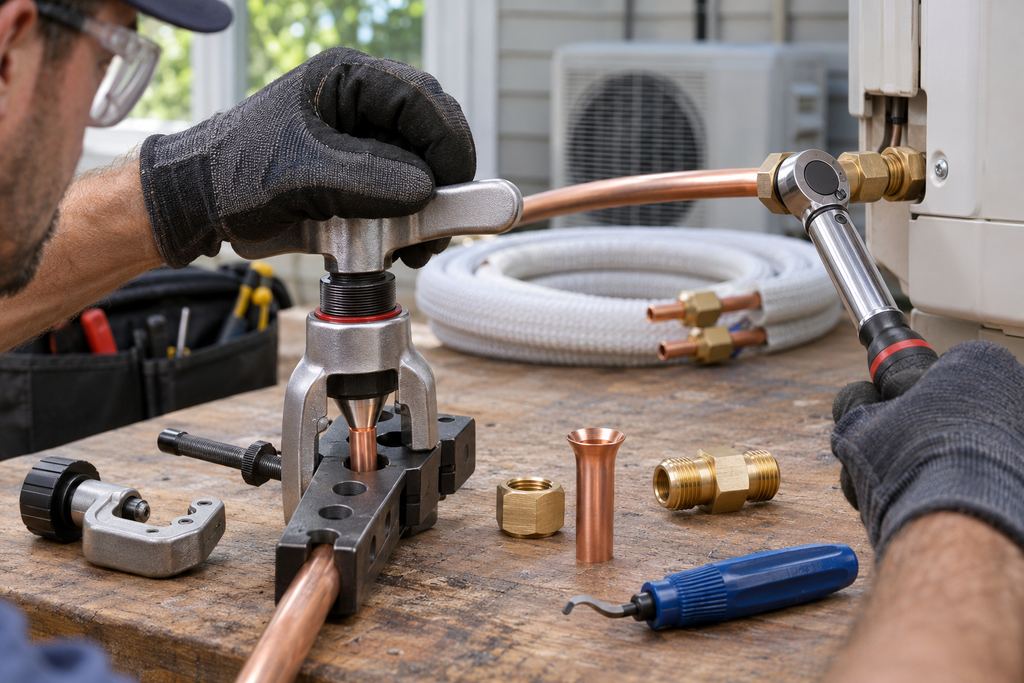
Prices, incentive information, refrigerant rules and efficiency standards are rechecked over time. A page whose facts have gone out of date is corrected, merged into another page or removed. Images on the site are generated illustrations and do not show real installers, customers or jobs. Guides are credited to the editorial team, as described on the authors page, and the two review stages are explained under review process.