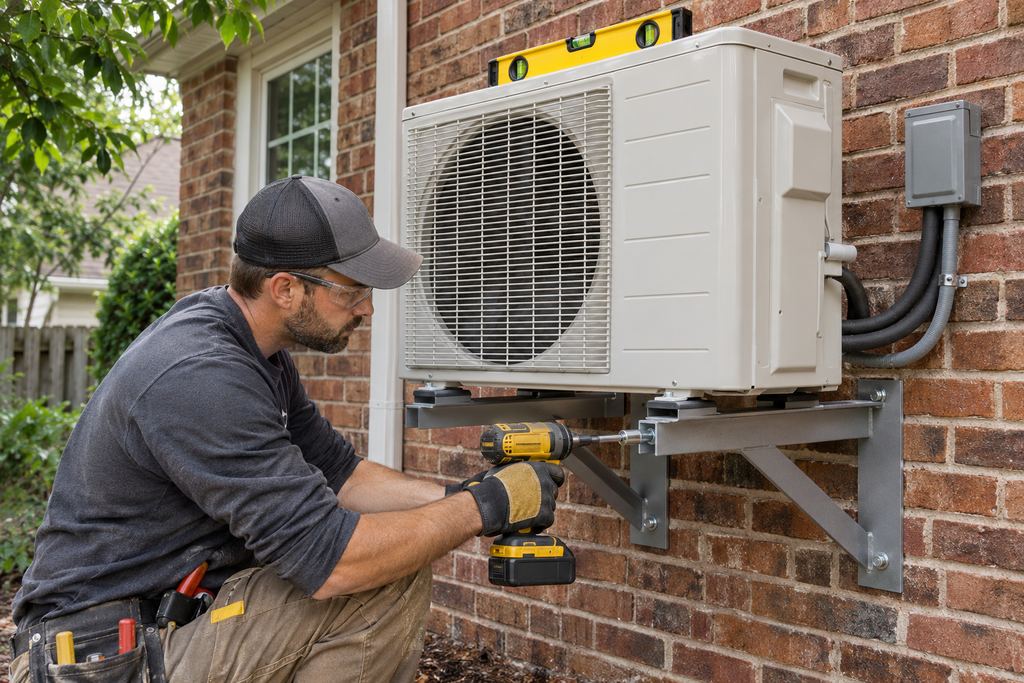
Mini Split Installation in Phoenix
For mini split installation in Phoenix, enter your ZIP code and describe the room, garage or casita you want to cool. The request is meant for independent local installers who serve your ZIP code. In a city where summer afternoons regularly pass 110 degrees, the plan should be built around cooling capacity on the hottest days, not the label size.
Sending your request
Please keep this page open. The form is locked so the request is not sent twice.
Your request was received
We passed it to an installer in your area. If one accepts, they contact you using the phone number or email you gave. We cannot say how soon, and you are not required to hire anyone.
No reply after a few days? Check your spam folder, then use the contact page.
Where Phoenix homes use mini splits
Most houses in the Valley already have ducted central air. Ductless units usually solve a specific room problem.
- Garages and workshopsAn attached garage can hold well over 100 degrees in July. A head sized for the door and walls makes it usable. See garage installation.
- Casitas and guest housesA detached casita on its own system avoids long duct runs from the main house.
- Arizona rooms and additionsEnclosed patios and later additions often sit outside the original duct design and run hot.
- Hot upstairs roomsSecond floors under a sun-baked roof that central air cannot keep up with.
- Homes moving off evaporative coolingOlder houses that relied on a swamp cooler can add refrigerated air room by room, which matters during humid monsoon weeks.
- Several rooms at onceA multi-zone system runs a few heads from one outdoor unit.
What the desert changes about the install
Sizing in Phoenix is driven by cooling. Winter heat loss is small, so a heat pump that is sized for summer covers January without trouble. Ask the installer for a load calculation that uses local design temperatures, and check the unit's maximum outdoor operating temperature in the spec sheet. Equipment that cools well at 95 degrees can lose output or shut down to protect itself if the outdoor unit sits in direct sun on a 115 degree afternoon.
Placement matters as much as size. Many Phoenix homes have flat or low-slope roofs, and outdoor units often go on the roof or a shaded wall bracket. Roof installs need proper curbs and flashing at every penetration. Older homes with block walls take more time to core through than stucco over wood framing. Long line sets on a west wall should be well insulated and covered against UV.
Dust storms during monsoon season load filters and outdoor coils fast. Plan to rinse filters more often from July through September and keep the outdoor coil clear.
How a request works in Phoenix
- You enter a ZIP code and the system type you have in mind.
- You add contact details and a short description of the rooms.
- An installer who accepts the ZIP code contacts you to arrange a visit.
- You compare the written estimates. You do not have to hire anyone.
Owner checks and installer work
Safe checks you can do
Only checks from the owner's manual that need no tools and no access inside the units.
- Rinse washable filters after a dust storm.
- Keep the outdoor unit free of tumbleweeds, palm debris and stored items.
- If the unit stops, check the breaker and reset it once; if it trips again, call.
- Look up the error code in the owner's manual before calling, so you can describe it.
Leave these to a professional
Refrigerant handling, flaring or brazing the line set, electrical connections and pressure or vacuum tests need a qualified technician.
- Load calculation and equipment selection.
- Roof or wall penetrations, flashing and line set routing.
- Vacuum, refrigerant charge and leak testing by an EPA Section 608 certified technician.
- New circuit, disconnect and any permit, done under Arizona and city rules.
Vetting a Phoenix installer
- 1What is your Arizona ROC license number?Search it on the Arizona Registrar of Contractors site and confirm it covers residential air conditioning work.
- 2Will the outdoor unit be in sun or shade?Ask how placement affects output on peak afternoons.
- 3Does the estimate include the electrical and any permit?Get model numbers and scope in writing.
- 4Which rebates might apply?APS and SRP serve most of the Phoenix area and run efficiency programs that change over time. Check their current offers and the ENERGY STAR rebate finder. The federal 25C credit ended for systems placed in service after 2025.
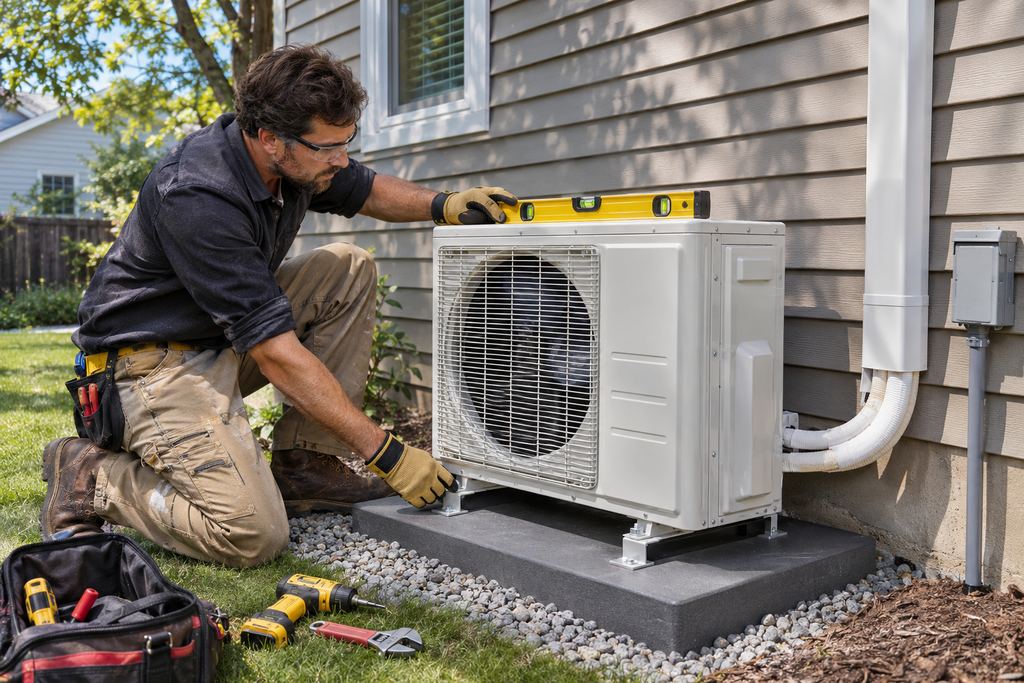
Phoenix and nearby ZIP codes
Requests are matched by ZIP code, and each independent installer decides which parts of Phoenix and the surrounding Valley it serves. This page does not promise coverage for any address. The online form is still being connected to installers; if it cannot send your request, it says so and nothing is saved. For budgeting, the installation cost guide lists what moves a quote, and what size mini split do I need gives a rough starting range.
Mini split installation in nearby cities
Only cities with a published installation page.
Questions
Can a mini split keep up with Phoenix summers?
Yes, when it is sized from a load calculation that uses local design temperatures and the outdoor unit is placed where it is not baking in full afternoon sun. Check the model's maximum outdoor operating temperature.
Do I need a permit for a mini split in Phoenix?
New circuits and HVAC installations commonly need permits. Ask the installer whether they will pull one with the City of Phoenix or your city, and get that in the written estimate.
Is a mini split worth it if I already have central air?
For a garage, casita, addition or one hot room, it often is, because it avoids extending ducts and lets you cool that space on its own schedule.
How do I check a contractor's license in Arizona?
Use the license search on the Arizona Registrar of Contractors website. Confirm the license is active and the classification covers air conditioning work.